
Skip to content

Philosophy

The life you’re buildingis fighting the lifeyou were taught to live.

You can be intelligent and still be stuck. Successful and still be afraid. Self-aware and still repeating the same pattern.

You can understand your problem perfectlyand still not change it.

You didn’t choose everything you inherited. You do choose what you pass on.

Because your decisions don’t come from logic alone. They come from your biology. Your history. Your conditioning. Your environment. Your experiences. Your definition of safety. And the possibilities you learned were available to someone like you.

Some of those things are yours. Some were handed to you.

The work is learning the difference.

The Five Gates of Freedom are the method I use to help you move from inherited patterns to deliberate choices.

  1. Acknowledgment
  2. Permission
  3. Clarity
  4. Courage
  5. Community

Five gates. Five different moves. One direction: towards a life you can actually call your own.

What science says

01

Your brain is trying to protect you. Not free you.

Your brain is built to predict. To recognise patterns. To conserve energy. To protect you from danger.

That is useful when you’re crossing a road. It becomes complicated when the “danger” is asking for more money, leaving a familiar career, disappointing your family, becoming visible, setting a boundary or becoming the first person in your family to do something differently.

Familiar does not always mean safe. And unfamiliar does not automatically mean wrong.

Sometimes the thing you’re calling “intuition” is wisdom. Sometimes it’s conditioning. Your work is learning the difference.
02

Overthinking is fear in a lab coat.

You research. You compare. You analyse. You ask for another opinion. You wait for more information. You tell yourself you’re being responsible.

And sometimes you are. But sometimes you’re using intelligence to negotiate with a decision you’re already afraid to make. More analysis doesn’t always create clarity. Sometimes it creates a more sophisticated form of avoidance.

You don’t need to stop thinking. You need a structure that turns thinking into movement.

03

Clarity is not something you find. It is something you build.

There is no perfect decision waiting somewhere for you to discover it.

  1. Decision
  2. Action
  3. Feedback
  4. Adjustment

You move. Reality responds. You learn. You adjust. That’s how clarity becomes real.

Clarity is not certainty. Clarity is knowing enough to take the next honest step.

04

You are allowed to outgrow what once kept you safe.

Some behaviours made sense once.

  • Being agreeable
  • Staying quiet
  • Working harder
  • Never needing anyone
  • Keeping your options open
  • Putting everyone else first
  • Avoiding risk
  • Controlling everything

Maybe those behaviours helped you survive. That doesn’t mean they have to run your future. A survival strategy can become a limitation long after the danger is gone.

Growth sometimes means thanking an old strategy for getting you here and refusing to let it drive where you go next.

05

Freedom is not just personal. It is generational.

This matters to me deeply. Because when you change how you think about money, leadership, work, relationships, boundaries, opportunity and possibility, you aren’t only changing your own life.

You change what becomes normal around you. You change what your children see. You change what the next generation believes is possible.

You can inherit scarcity. You can inherit fear. You can inherit silence.

You can also inherit wisdom. Resources. Courage. Standards. Self-trust.

Generational wealth isn’t only money. It is what you teach the people who come after you about what is possible.

Most times it’s imprinted in the fights your ancestors fought for you to be where you are today.

From inherited patterns to deliberate choice.

The Five Gates are not five nice ideas. They describe the sequence through which real change happens.

You cannot build clarity around something you refuse to recognise. You cannot act on a life you haven’t given yourself permission to want. You cannot build courage around a decision you haven’t made clear. And you cannot sustain change in an environment that constantly pulls you back into the person you used to be.

Gate 01Inner shift

Acknowledgment

Tell yourself the truth.

What is true right now that you’ve been unwilling to say out loud?

Enter gate 01

Acknowledgment

Tell yourself the truth. Stop negotiating with reality: the truth will set you free.

The question
What is true to you right now that you’ve been unwilling to say out loud?
Explore AcknowledgmentReflection & practice

This is where the work begins. Not with positive thinking. Not with a vision board. With the truth.

Maybe you’re not “exploring.” Maybe you’re stuck. Maybe you’re not “waiting for the right opportunity.” Maybe you’re afraid. Maybe you’re not “being realistic.” Maybe you’ve learned to make your desires small enough that nobody can reject them.

Name the cage before you ask the Universe to break free.

The work

Look at your life without defending it. What isn’t working? What have you known for months? What are you pretending not to know? What keeps repeating? What are you calling “complicated” because the truth would require a decision?

Next: Permission →

Permission

Want something you were never taught to want.

The question
What would you want if you didn’t have to justify your desires to anyone?
Explore PermissionReflection & practice

This gate is deeper than confidence. Because sometimes the problem isn’t: “I don’t know what I want.” It’s: “I’m not sure I’m allowed to want it.”

  • More money
  • More freedom
  • A different career
  • A different relationship
  • A different country
  • More visibility
  • More power
  • More rest

A life that looks nothing like the one your family expected.

And when your desire threatens your belonging, your brain can become very creative at convincing you that you never wanted it anyway, or even if you want it, it’s a joke that you might even get there.

The work

Write down what you want. Not what makes sense. Not what would make your parents proud. Not what looks good on LinkedIn. Not what you can currently justify. What do you want? Then notice what happens inside you when you admit it.

Next: Clarity →

Clarity

Separate your voice from the voices you inherited.

The question
If you stopped trying to keep every option open and actually fully 100% commit without looking back, what would you choose?
Explore ClarityReflection & practice

This is where the work becomes precise.

  • What do you actually want?
  • What did your family teach you to want?
  • What did your culture teach you was respectable?
  • What did your past teach you was dangerous?
  • What does your nervous system associate with safety?
  • What does your ambition actually require?
  • And what are you trying to keep simply because you’ve already invested so much in it?

Clarity is not having every answer. It is being able to distinguish:

wisdom from fear

desire from conditioning

possibility from fantasy

responsibility from self-abandonment

A chosen life requires chosen trade-offs.

Next: Courage →

Courage

Act before certainty arrives.

The question
What is the next move you can make before you feel ready?
Explore CourageReflection & practice

This is where insight becomes behaviour. And this is where many people discover that understanding themselves was the easy part.

You can know the pattern. Know where it came from. Know what you should do. And still not do it.

Because your brain learns through experience. You don’t think your way into courage. You practise it.

  • The conversation
  • The application
  • The boundary
  • The investment
  • The resignation
  • The launch
  • The ask
  • The first uncomfortable step

You act. Your mind gets new evidence. You act again.

And gradually, the thing that once felt impossible becomes something you know how to do.

Next: Community →

Community

Build an environment where the new you can survive.

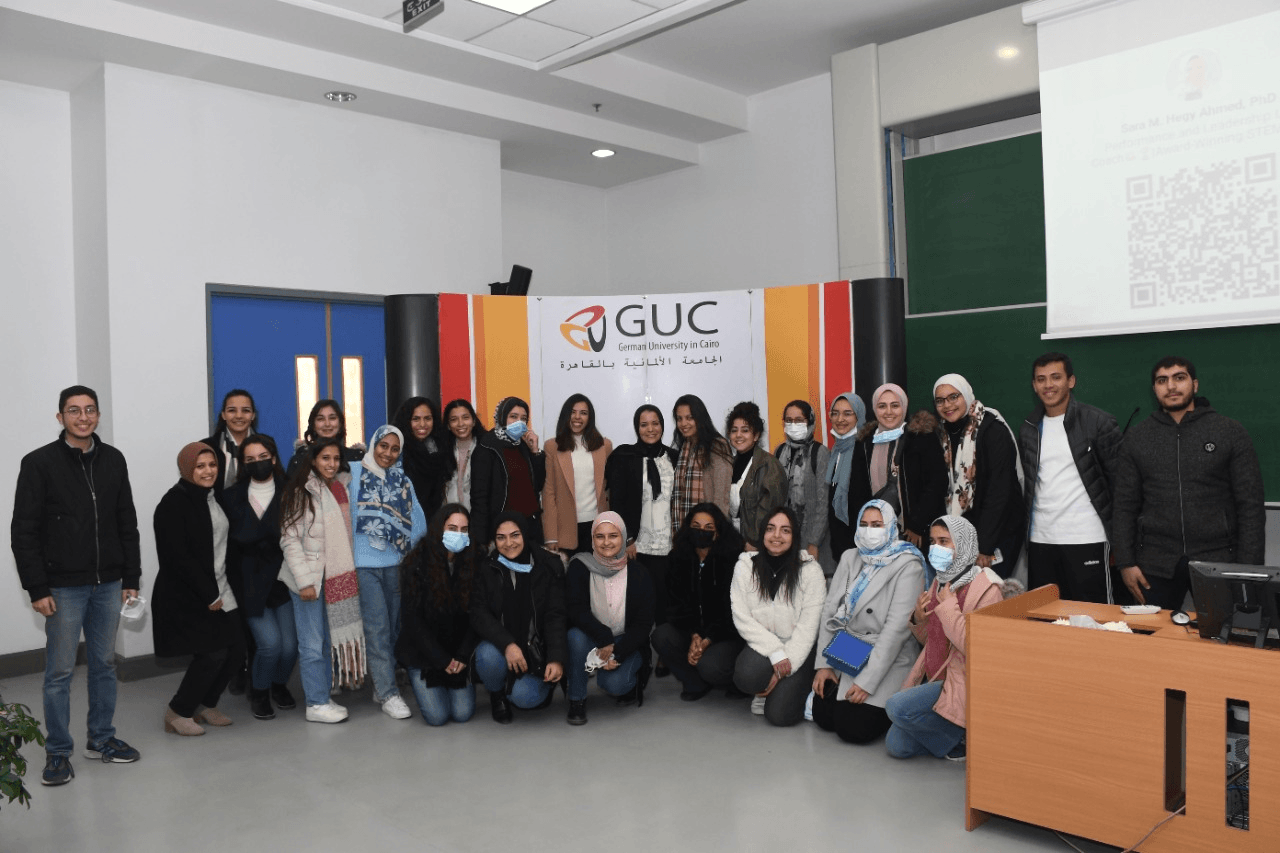
Sara Hegy with members of her community
The question
You don’t need more people telling you that you can do it. You need people who can help you become the person who does it.
Explore CommunityReflection & practice

You can make a decision alone. Changing your life is harder alone. Because environments are powerful.

  • Your relationships teach you what is normal.
  • Your family teaches you what is acceptable.
  • Your peers teach you what is possible.
  • Your workplace teaches you what is rewarded.

And when you start changing, the people around you may unconsciously pull you back toward the version of you they recognise. Not because they are bad. Because systems resist change.

The work

Find people who can hold both: your truth and your standards. People who won’t shame you for growing. People who won’t let you hide behind your excuses. People who have walked further than you. People whose lives expand your definition of possible.

The Five Laws.

The gates change your behaviour.The laws challenge the rules you’ve been living by.

01 · Consequence

Playing safe is not safe. It only hides the bill.

  • The job you hatecosts you.
  • The relationship you keep toleratingcosts you.
  • The opportunity you keep postponingcosts you.
  • The version of yourself you keep suppressingcosts you.
  • And yes, taking the riskcosts you too.

You don’t get to choose whether you pay. You choose what you pay for.

02 · Compounding

Your life is being built by things you barely notice.

  • The boundary you keep abandoning.
  • The lie you keep telling yourself.
  • The €100 you keep investing.
  • The skill you practise for 20 minutes.
  • The person you keep surrounding yourself with.
  • The standard you keep lowering.

None of it looks dramatic. Until five years pass.

Then everyone calls it success. Or failure. Or luck. It was repetition.

Your future is being rehearsed by your present.

03 · Trade-offs

You cannot have it all.

And anyone selling you that idea is selling you a fantasy.

  • and
  • and
  • and
  • and
  • and

Every life is a negotiation. The difference is whether you made the deal consciously.

Freedom is not having unlimited choices. Freedom is choosing which choices you are willing to lose.

04 · Disruption

Sometimes the life you are trying to save is the life you need to escape.

Read that again.

You can spend years trying to repair a career you have already outgrown.

  • A relationship that requires you to disappear.
  • A business model that is draining you.
  • A version of yourself that was built for survival.

We are taught to call persistence a virtue. But persistence can become self-betrayal. Not everything that breaks needs fixing. Sometimes the breakdown is the information. Sometimes the ending is the beginning.

Sometimes the most courageous thing you can do is stop rebuilding the cage.

05 · Inheritance

You can inherit a fortune and still inherit poverty.

Because poverty isn’t only about money.

  • You can inherit money and inherit fear.
  • You can inherit education and inherit limitation.
  • You can inherit a successful family and inherit the belief that failure is unacceptable.
  • You can inherit resilience and inherit the inability to rest.
  • You can inherit ambition and inherit the belief that your worth must be earned.

We inherit more than assets. We inherit nervous systems. Beliefs. Standards. Stories. Fears. Wisdom. Rules.

And sometimes the greatest act of wealth creation is not accumulating more. It is refusing to pass the damage forward. You are not obligated to continue an inheritance simply because it was handed to you.

Take the wisdom. Build the wealth. Break the pattern.

Different lives. A different next chapter.

The framework stays the same. The life you’re building does not.

One person may need to leave. Another may need to stay but lead differently. One may need to build wealth. Another may need to rebuild trust. One may need to stop performing success and finally define it.

Where do you see yourself?

Different circumstances. Different decisions. Same human work.

Story 01 / 05 · Rebuilding Trust in Growth

From protecting herself to opening up.

Ruby’s experience

01 · Where it started

“I was skeptical about coaching after having a previous bad experience.”

02 · What changed

“Sara helped me identify the root issues quickly and effectively and restored my trust in the coaching process.”

Ruby

03 · The work behind the change

  • She acknowledged her doubts and approached the process with caution.
  • She gave herself permission to experience coaching differently.
  • She discovered that real coaching could be practical, genuine, and deeply personal.

The shift. From protecting herself from disappointment → opening herself to transformation.

Explore the Five Gates ↗

You don’t have to have it all figured out to begin.

Recognise. Permit. Clarify. Act. Build the environment that sustains the change.

The questions people ask.

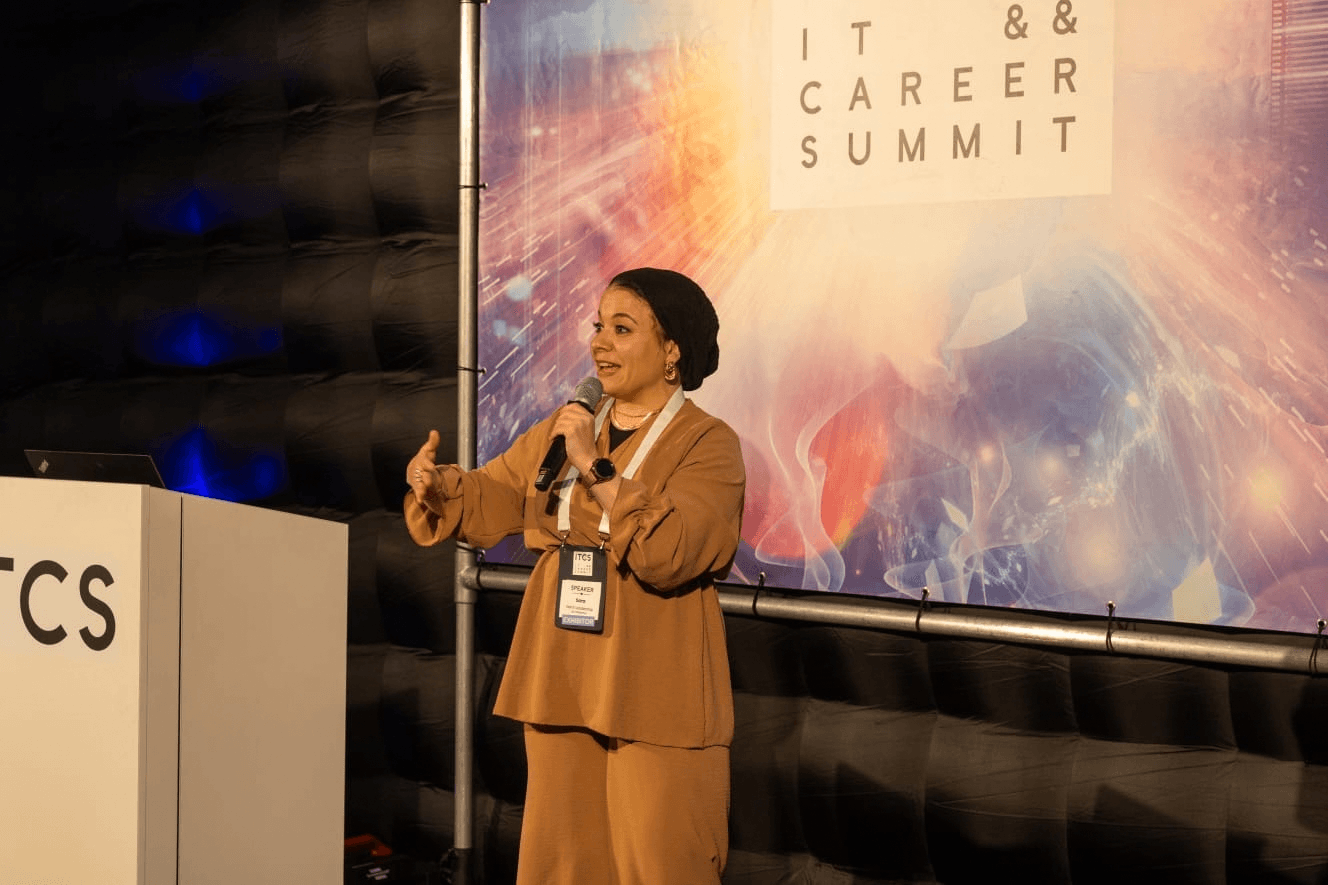
Sara Hegy speaking on stage at the IT and Career Summit
“How long is this going to take?”

How long are you willing to stay in the life you’re trying to outgrow?

There is no finish line. And there is no universal timeline. The speed depends on how willing you are to stop negotiating with yourself and actually do the work required to experience life from a state of flow.

Sometimes recognition happens in one conversation. Sometimes clarity takes months. Sometimes courage has to be practised until your nervous system stops treating the unfamiliar as a threat. And community? That’s not a box you tick.

Freedom is not something you achieve. It’s something you become capable of living. The question isn’t: “How long will this take?” It’s: “How much longer am I willing to live the way I am living now?”

“Is this a course or a coaching programme?”

No. It’s a way of living.

Courses end. Coaching sessions end. Your decisions don’t. The Five Gates give you a way to understand what is happening inside you, identify where you’re stuck, and know what needs to happen next.

You can use it alone. With a coach. Inside a community. During a career decision. During a breakup. While building a company. While rebuilding your relationship with money. While becoming the first person in your family to do something differently.

The circumstances change. The human operating system doesn’t. This isn’t another thing to consume. It’s a way to move through your life.

“What if I’m stuck on one gate?”

Good. Now we know where to look.

Being stuck isn’t evidence that you’re broken. It’s information.

Can’t give yourself permission to be OK with where you are? Maybe you don’t have a clarity problem. Maybe you have a belonging problem. Can’t find clarity? Maybe you’re trying to make one decision that keeps everyone else happy. Know exactly what you need to do but still can’t move? Maybe you don’t need more information. Maybe you’re afraid of what happens after you act. Keep repeating the same pattern? Maybe your environment is rewarding the very behaviour you’re trying to change.

Stop treating stuckness as failure. Read it as data. Your resistance is telling you something. Learn to read it.

“Does this really work for career, business, relationships and life?”

Your brain doesn’t care what category you’ve put the problem in.

It cares about prediction. Protection. Belonging. Safety. Familiarity.

So yes. Career. Money. Business. Leadership. Relationships. Where you live. Who you love. What you build. What you leave behind.

The Five Gates aren’t about fixing a particular area of your life. They’re about changing the way you make decisions inside your life. Because you can change jobs and take the same fear with you. Move countries and take the same identity with you. Leave a relationship and recreate the same dynamic somewhere else. Make more money and still carry a scarcity mindset.

Changing the scenery is not the same as changing the pattern.

“Can I do this without community?”

Of course. You can do almost anything alone.

That’s not the same as saying you should. Isolation can make your old reality feel like the only reality.

The right people give you perspective. They challenge your blind spots. They hold you accountable. They show you possibilities your current environment may never have exposed you to. And sometimes, most importantly, they remember who you said you were becoming when you forget.

You don’t need cheerleaders. You don’t need an audience. You don’t need 10,000 people telling you that you are amazing. You need witnesses. People who can see the future version of you while you’re still struggling to believe she exists.

“What if my circumstances are actually too difficult to change?”

Then we don’t romanticise your circumstances.

Some situations are genuinely brutal. Some systems are unfair. Some doors are closed. Some people have fewer choices than others. Freedom does not mean pretending that privilege, money, trauma, systems or circumstance don’t matter. It means refusing to confuse constraint with complete powerlessness.

Maybe you can’t change the system today. Can you change your strategy? Can you build a resource? Can you create an exit plan? Can you ask for help? Can you set one boundary? Can you make one decision? Can you stop making the situation worse by abandoning yourself inside it?

You don’t need to control everything to change something. And sometimes the first act of freedom is simply telling the truth: “This is where I am. This is what I cannot control. And this is what I am going to do next.”

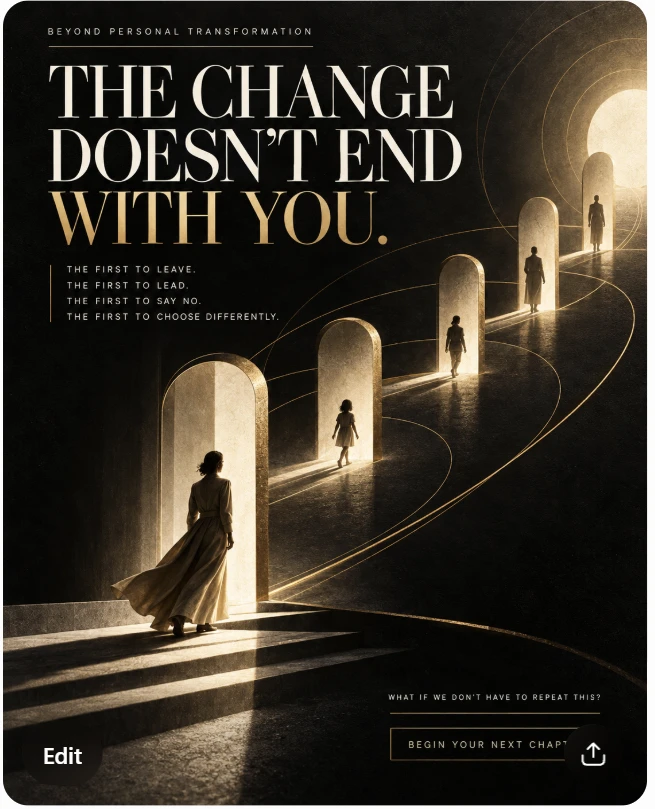
The change doesn’t endwith you.

  • The first to leave.
  • The first to lead.
  • The first to say no.
  • The first to choose differently.

Maybe you are the first in your family to build wealth. That’s not rebellion. That’s evolution. You keep the wisdom, question what doesn’t work, and stop passing pain forward as tradition.

That is how personal transformationbecomes generational change.

What if we don’t have to repeat this?

What if I’m not ready?

Waiting to feel ready is the most socially acceptable way to stay exactly where you are.

Don’t wait for certainty. Don’t wait for permission. Don’t wait until fear disappears.

What are you going to inherit,and what are you going to change?